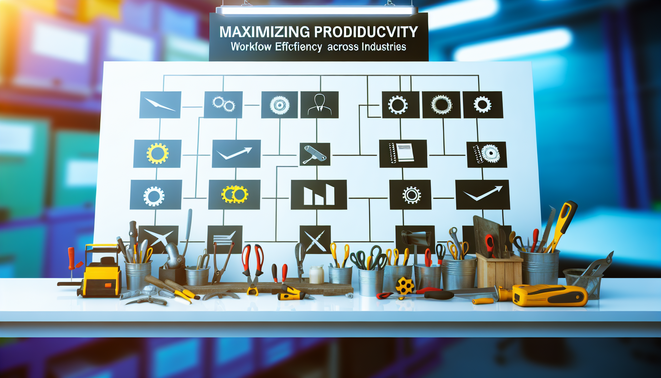
Introduction to Workflow Efficiency
In today’s fast-paced work environment, workflow efficiency is paramount for enhancing productivity and achieving business goals. Companies are increasingly leveraging technology, such as automated systems and data management tools, to streamline operations and minimize waste. For instance, organizations that implement lean management principles can reduce process waste by up to 30%, strengthening workforce engagement and speeding up the adoption of new systems [Source: Fast Company].
The integration of workflow efficiency practices not only improves operational performance but also empowers employees to make informed decisions quickly. By standardizing processes, organizations can better identify and address pain points, ensuring alignment with broader company goals and enhancing overall sustainability [Source: Inbound Logistics].
Moreover, modern workforce management systems, when digitized and integrated into core operations, facilitate significant improvements in productivity and employee engagement. They enable managers to anticipate challenges and optimize labor resources in real time, especially in high-demand situations [Source: Australian Manufacturing]. Consequently, an emphasis on workflow efficiency not only drives individual productivity but also contributes to a more innovative and responsive workplace.
Case Studies of Successful Workflow Improvements
Numerous industries are successfully implementing workflow improvements through innovative strategies that lead to significant efficiency gains. Here are some notable examples:
- Healthcare Efficiency: In the healthcare sector, operational inefficiencies within operating rooms (ORs) can account for up to 40% of costs attributed to delays and cancellations. Organizations are increasingly recognizing the need for digitized systems to streamline these processes. For instance, by embracing technology to optimize surgical scheduling and equipment management, hospitals have reported improved staff wellbeing and reduced attrition rates. This shift is essential to counteract the global shortage of surgical personnel and enhance patient care quality [Source: HIT Consultant].
- Pharmaceutical Manufacturing: In the pharmaceutical sector, Lean principles combined with automation have reshaped manufacturing processes. By adopting a simpler workflow approach, companies can manage complexity and drive continuous improvement. For example, a notable case involves the application of Lean in cell therapy manufacturing, leading to increased patient access to innovative therapies. Companies that prioritize simplicity have consistently outperformed peers by enhancing operational clarity and efficiency [Source: PharmaPhorum].
- Warehouse Automation in Retail: A recent implementation by Wayland Games demonstrated how warehouse automation can significantly enhance efficiency. Following an upgrade to their distribution center with automated systems, the company reported faster fulfillment, increased order accuracy, and reduced employee strain. This transformation prepared them for future growth and improved service levels, showcasing the successful impact of automation on operational workflow [Source: The Manufacturer].
- AI in Finance: The Texas Department of Transportation (TxDOT) illustrates a strategic shift towards operationalizing AI in government functions. By automating invoice workflows and implementing data-driven tools for incident detection, TxDOT saved an estimated 22,000 staff hours annually. This case exemplifies how integrating AI into existing processes not only enhances efficiency but also improves service delivery across public agencies [Source: Government Technology].
These case studies reflect a broader trend across various sectors, showcasing how targeted strategies—ranging from automation to AI integration—can lead to significant gains in efficiency and overall operational effectiveness. For further insights on optimizing workflow management, consider exploring articles like Understanding Small Business Workflow Management and Accounts Payable Automation Saves Time.
Lean Management Principles for Enhanced Productivity
Lean management principles are essential for enhancing productivity through the systematic reduction of waste and improvement of operational efficiency. By focusing on value creation and eliminating non-value-added activities, organizations can significantly streamline their processes. Research shows that companies applying lean management can reduce waste by up to 30%. This reduction stems from a commitment to simplicity and clearer processes, enabling continuous improvement and empowering employees to make decisions that enhance workflow efficiency [Source: Fast Company].
Key lean principles include continuous improvement (Kaizen), respect for people, and standardized work processes. By implementing these principles, businesses can foster an environment where employees are engaged in identifying and solving inefficiencies, ultimately leading to better performance outcomes. For instance, in healthcare, lean techniques have helped practices reduce avoidable appointments by 5.1% and free up more than nine hours of clinical time each week [Source: Consultancy UK].
Moreover, integrating lean management with automation can streamline operations further, reinforcing process clarity and ultimately delivering enhanced patient access to services in sectors like healthcare and manufacturing. Embracing these principles aligns operations with strategic goals and prepares organizations for future technological advancements [Source: PharmaPhorum]. For more insights on enhancing workflow efficiency, consider reading about workflow management strategies.
Technological Tools for Workflow Optimization
In the realm of workflow optimization, several cutting-edge technologies and tools are significantly enhancing productivity through improved collaboration and communication.
- AI-Powered Collaboration Tools: AI is transforming workplace collaboration, with 80% of IT leaders excited about AI-enhanced tools that streamline communication and task management. This trend is growing particularly in hybrid work environments, where managing workflows efficiently becomes crucial. Notable examples include tools that integrate AI capabilities allowing for intelligent suggestions and automated responses, therefore reducing time spent on repetitive tasks [Source: EdTech Magazine].
- End-to-End Workflow Transformation: For companies to fully realize the ROI of their AI investments, it’s essential to embrace comprehensive workflow transformations. Tools that offer end-to-end solutions, like productivity co-pilots and task management systems, are increasingly becoming vital. These tools not only facilitate task execution but also help reimagine existing processes, driving meaningful change in how teams operate [Source: Axios].
- Seamless Content Sharing and Feedback Tools: Platforms such as Dropbox are introducing features tailored for specific industries, like filmmaking. Tools such as Replay provide video review capabilities that allow for real-time feedback during the creative process. This not only enhances collaboration among team members but also helps creatives focus more on innovation while ensuring all feedback is organized and accessible in one place [Source: Variety].
By leveraging these technologies, teams can significantly enhance their workflow capabilities, optimize collaboration efforts, and improve overall productivity. For more insights on workflow management technologies, check our article on evaluating workflow management software value.
Best Practices for Implementing Workflow Changes
Adopting new systems or improving existing workflows requires careful planning and actionable strategies to ensure successful implementation. Here are some best practices organizations can follow:
- Engage Employees Early: Incorporate employees into the planning and decision-making processes. Research shows that organizations that actively involve their workforce experience stronger buy-in and quicker adoption of new systems, reducing resistance to change [Source: Fast Company].
- Implement Lean Management Principles: Leverage lean management techniques to identify and eliminate waste in processes. By streamlining workflows, organizations can reduce bottlenecks and enhance efficiency by up to 30% [Source: Consultancy UK].
- Start with Standardization: Before introducing new tools or systems, ensure your processes are standardized. This proactive step prepares your organization for seamless integration and helps identify pain points that need addressing [Source: Fast Company].
- Focus on End-to-End Workflow Transformation: Embrace a comprehensive approach that rethinks how entire workflows operate rather than simply adding tools. For instance, implementing AI should not be about merely introducing software but ensuring it transforms operations from the ground up [Source: Axios].
- Conduct Thorough Audits: Before automating processes, perform detailed audits of existing workflows. Determine where automation can handle repetitive tasks to allow employees to focus on higher-value activities [Source: Forbes].
- Embed Transformation into Company Culture: Ensure that continuous improvement and transformation are integral to your company’s DNA. When organizations view transformation as a foundational aspect of their operations, they tend to be more resilient and adaptable to change [Source: Consultancy UK].
These strategies can significantly enhance the effectiveness of workflow changes and help organizations navigate the complexities of adopting new systems. For further exploration of workflow management and automation, consider reading about workflow management strategies and evaluating software tools.
Future Trends in Workflow Efficiency
Emerging trends in workplace automation and digital transformation are set to significantly reshape workflow strategies in 2024 and beyond. Increasingly, businesses are integrating lean management principles with advanced technologies, which can reduce process waste by up to 30% [Source: Fast Company]. This approach emphasizes employee involvement in technology adoption, fostering a culture that embraces change and empowers team members to make rapid, informed decisions. As organizations streamline operations, the integration of technology and human intelligence will simplify tasks, alleviate employee burdens, and enhance overall productivity.
The future workforce will also witness a transformation in job roles, where traditional positions are broken down into smaller, value-added components that can be handled in conjunction with AI [Source: Forbes]. This shift demands new skill sets focused on critical analysis of AI outputs and ethical deployment of automation, highlighting a growing need for AI literacy among all employees. The influx of hybrid work models further underscores the importance of technologies that enhance collaboration and communication among teams, as echoed by the sentiment that “automation isn’t a threat” but rather a facilitator of more strategic tasks for employees [Source: Hospitality Net].
As AI becomes more proactive, managers will shift from traditional oversight to acting as orchestrators of digital workforces, guiding AI systems to create value while ensuring human oversight where necessary [Source: Forbes]. Understanding the balance between automation and human intervention will be critical as companies seek to optimize their workflows and improve efficiency in an increasingly automated environment. Integrating learnings from successful implementations, such as those in the hospitality sector, can serve as a blueprint for other industries aiming to maximize the benefits of workplace automation [Source: EdTech Magazine].
For more insights into enhancing workflow efficiency and automation strategies, visit ampautomations.com.
Sources
- Axios – End-to-End Workflow Transformation Using AI
- Australian Manufacturing – Beyond Compliance: Workforce Management as a Driver of Competitiveness
- Fast Company – Build the Tech-Enabled Workforce of the Future
- Forbes – Why Prompt Engineering Isn’t the Most Valuable AI Skill in 2026
- Forbes – 7 Values That Are Redefining the Workplace of the Late 2020s
- EdTech Magazine – Optimized Workplaces Deliver Better Higher Ed Employee Experience
- HIT Consultant – Innovation: Digitizing the OR to Solve Workforce Burnout
- Hospitality Net – Automation Isn’t a Threat
- Inbound Logistics – The Data Advantage That Will Define Tomorrow’s Warehouse Performance
- PharmaPhorum – Simplicity Wins: How Lean Principles and Smart Automation Can Reshape Pharma Manufacturing
- The Manufacturer – Wayland Games Accelerates Fulfilment and Boosts Capacity with Warehouse Automation Upgrade
- Government Technology – Texas Department of Transportation Updates AI Strategic Plan
- Consultancy UK – Why Transformation is the New Due Diligence
- Consultancy UK – Develop Consulting Shortlisted for HSJ Partnership Award