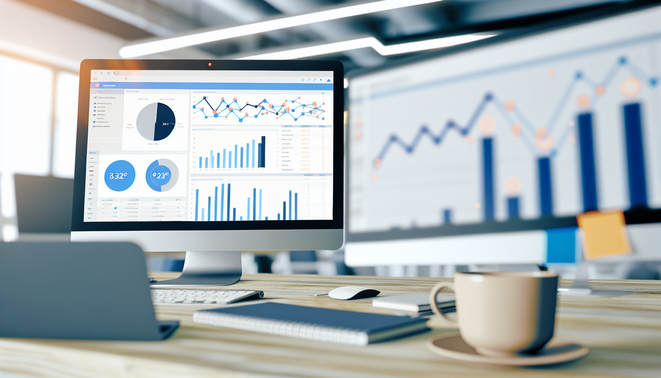
Introduction to CRM Reporting and Analytics
CRM reporting and analytics play a critical role in enhancing customer relationship management by providing businesses with essential insights that drive sales and customer satisfaction. Effective CRM reporting allows companies to collect and analyze customer data systematically, which aids in identifying trends, understanding customer behavior, and making data-driven decisions [Source: Shopify].
By leveraging analytics, businesses can develop targeted marketing strategies and personalize customer interactions, leading to improved customer engagement. For instance, companies utilizing AI-driven CRM systems have reported a 5% increase in conversion rates, demonstrating the significant impact of actionable insights on sales performance during key shopping periods [Source: MediaPost].
In summary, CRM reporting and analytics are invaluable tools for organizations aiming to refine their strategies, enhance customer experiences, and ultimately boost their sales. Understanding and implementing these components can position businesses for sustained growth in a competitive landscape.
Best Practices for Effective CRM Analytics
To enhance CRM analytics effectively, organizations should adopt several best practices that focus on data collection, tool integration, and data accuracy.
1. Strategic Data Collection:
Implementing structured data collection strategies is crucial. Organizations should focus on gathering high-quality, real-time data that reflects actual customer behaviors rather than relying on estimates or assumptions. This not only improves the quality of analysis but also enhances personalized marketing efforts. For example, Fiji Airways successfully integrated live reservation data into Salesforce Data Cloud, enabling timely and precise marketing initiatives based on actual customer intent [Source: Travel Weekly].
2. Seamless Tool Integration:
Utilizing integrated tools is vital for efficient CRM analytics. Organizations should focus on connecting existing tools rather than acquiring more. Comprehensive integration leads to a more holistic view of customer data, allowing for more targeted marketing strategies. For instance, ensuring that data sources interact well within CRM systems can drive more effective personalization throughout the customer journey, as highlighted by industry experts emphasizing the need for connecting high-quality identity data to enable better AI outcomes [Source: The Drum].
3. Ensuring Data Accuracy:
Data accuracy is essential for reliable analytics. Regular audits and updates help eliminate discrepancies in customer information, which in turn supports accurate predictions and insights. Employing automated validation rules can significantly enhance the quality of your datasets, allowing for robust decision-making and strategic planning. Consistently maintaining clean data not only supports immediate analytics needs but also aids long-term customer relationship management efforts.
By implementing these best practices, organizations can optimize their CRM analytics, ultimately leading to better customer engagement and enhanced business intelligence. For more insights on data accuracy and automation in CRM systems, consider reading about ensuring security in automated processes or reducing manual data entry.
Understanding Key Metrics for CRM Success
Customer Relationship Management (CRM) relies on several key metrics to gauge success and drive strategic business decisions. Two of the most critical metrics in this regard are Customer Lifetime Value (CLV) and Customer Churn Rate.
Customer Lifetime Value (CLV):
Customer Lifetime Value (CLV) is a forecast of the total revenue a business can expect from a single customer account throughout their relationship. Understanding CLV helps businesses determine how much they can afford to spend on customer acquisition and retention. By increasing CLV, organizations can improve profitability and justify higher marketing investments. For example, research indicates that a 5% increase in customer retention can boost profits by 25% to 95% [Source: Forbes]. Tools like Salesforce provide analytics to calculate and enhance CLV, which is essential for strategic planning.
Customer Churn Rate:
On the other hand, the Churn Rate measures the percentage of customers who stop using a company’s product or service during a specified timeframe. High churn rates can signal dissatisfaction, ineffective customer service, or inadequate product fit. Reducing churn is vital, as acquiring new customers is generally more costly than retaining existing ones. According to industry studies, losing a customer can cost businesses five times more than retaining one [Source: FT Markets]. Monitoring and addressing churn helps organizations refine their offerings and maintain a loyal customer base.
By utilizing metrics like CLV and Churn Rate, businesses can make informed decisions aligning with customer needs, ultimately leading to increased efficiency and profitability. For more insights on improving customer engagement and retention using CRM systems, check out our article on enhanced engagement strategies.
Navigating Common Challenges in CRM Analytics
Organizations face several common challenges when adopting CRM analytics, primarily revolving around data silos and the complexities of tool integration.
Data Silos:
One significant obstacle is data silos, which occur when information is isolated within different departments or systems, making it challenging to create a cohesive customer view. This lack of integration hampers analytical capabilities and can lead to inaccurate insights. A study noted that 89% of companies have not scaled their AI initiatives beyond half due to inadequate data foundations, highlighting the critical need for unifying data to harness analytical tools effectively [Source: Pharmaphorum].
Centralized Data Management:
To overcome data silos, organizations should implement a centralized data management system that allows for real-time data access across functions. Utilizing tools like Salesforce Data Cloud can facilitate this integration, allowing for streamlined access to live data without the need for cumbersome data pipelines, as demonstrated by Fiji Airways [Source: Travel Weekly].
Integrating Advanced Analytic Tools:
Additionally, integrating advanced analytic tools poses its challenges, often requiring extensive customization and training. Companies can address this by embedding business intelligence directly into existing systems, as seen with LodgIQ’s AI-driven platform for the hospitality sector, which automates manual reporting and provides a seamless integration layer for enhanced strategic decision-making [Source: Hospitality Net].
In conclusion, by focusing on unifying data sources and leveraging integrated tools, organizations can effectively navigate the challenges of CRM analytics and unlock their full potential. For more on improving workflow through automation, consider reading about workflow management or enhancing customer engagement.
Advanced Tools for CRM Reporting
In the realm of CRM reporting and analytics, several advanced tools and technologies are enhancing data visualization, reporting accuracy, and real-time processing. Here are key highlights from some of the most popular platforms and their capabilities:
LodgIQ:
This AI-driven revenue management platform revolutionizes data integration and decision-making for the hospitality sector. LodgIQ offers advanced analytics, automated reporting, and real-time integration, allowing revenue managers to transcend daily price adjustments and architect comprehensive commercial strategies. By embedding business intelligence directly into its revenue management system, LodgIQ significantly boosts speed, automation, and strategic precision for hospitality leaders [Source: Hospitality Net].
Rad AI:
This innovative tool enhances diagnostic reporting in healthcare through its advanced speech recognition capabilities, accommodating challenges like overlapping speech and complex medical terminology. Rad AI’s model employs a unique voting algorithm to optimize transcription accuracy in real time, making reporting more efficient and precise. The platform integrates workflow intelligence that offers real-time insights, enabling users to streamline their reporting processes [Source: Newsweek].
Farmonaut:
Focused on agricultural applications, Farmonaut leverages digital technologies to provide real-time analytics and crop forecasting. This cloud-based platform supports organizations and cooperatives with robust planning tools, tailored for scalable management in challenging agricultural environments. While its primary focus is on agriculture, the implementation of similar frameworks can be seen in CRM systems looking to integrate real-time data handling and decision-making capabilities [Source: Farmonaut].
These tools illustrate the trend towards greater automation and efficiency in CRM reporting, underscoring the importance of integrating AI and real-time analytics in diverse industry contexts. Exploring platforms like these can provide significant advantages in terms of operational effectiveness and data-driven decision-making. To learn more, consider reading about automated dashboards for efficiency and how automation enables real-time business insights.
Future Trends in CRM Analytics
Emerging trends in CRM analytics are increasingly influenced by advancements in artificial intelligence (AI) and the pursuit of personalized customer engagement. One notable trend is the rise of Agentic AI, which enables systems to analyze real-time data autonomously, make recommendations, and execute tasks without human oversight. This evolution enhances operational efficiency and speeds up decision-making processes in customer relationship management, thereby allowing businesses to respond more swiftly to customer needs [Source: Food Business News].
Advanced analytics is another critical aspect, transforming raw data into actionable insights by deepening the understanding of customer preferences and behaviors. This capability is paramount for businesses aiming to personalize interactions and enhance customer satisfaction [Source: Food Business News]. As AI continues to evolve, we can expect CRM systems to increasingly leverage predictive analytics to forecast customer trends and improve retention strategies, thus driving more targeted marketing efforts [Source: Forbes].
Moreover, there is a growing emphasis on creating personalized customer experiences. Businesses are exploring AI-driven tools that facilitate tailored marketing campaigns and individualized customer journeys, which are projected to enhance engagement and foster loyalty. In fact, marketing automation that efficiently manages these personalized interactions is becoming integral to CRM strategies [Source: Food Business News].
In summary, the future of CRM analytics will likely be defined by a combination of AI-enhanced predictive capabilities and a focus on delivering personalized customer experiences, setting the stage for a more dynamic and responsive approach to customer relationship management [Source: Forbes].
Conclusion
As businesses continue to leverage CRM reporting and analytics, refining strategies based on data insights becomes paramount. By adopting the best practices, understanding key metrics, and utilizing advanced tools, organizations can enhance their customer relationships and ensure sustained growth. Stay ahead of the curve by continuously exploring emerging trends in CRM analytics and integrating effective solutions into your operations. For more information on optimizing your CRM practices, visit AMP Automations.
Sources
- Farmonaut – Agriculture in Niger: Challenges & Opportunities
- Food Business News – Five Tech Trends for Tomorrow
- Forbes – Is Salesforce Stock a Buy at $230?
- Hospitality Net – LodgIQ
- FT Markets – Losing a Customer Can Cost Businesses Five Times More
- MediaPost – Black Friday Haul
- Newsweek – Rad AI: New Tool to Improve Accuracy and Quality
- Travel Weekly – Fiji Airways First to Unlock Daily Customer Insight
- The Drum – Four Steps to Ensure Your Brand is AI Ready
- Pharmaphorum – Veeva Commercial Summit 2025
- AMP Automations – Enhancing Customer Engagement with Automated Communication Today
- AMP Automations – Ensuring Security in Automated Processes Made Simple
- AMP Automations – Best Practices for Reducing Manual Data Entry Today
- AMP Automations – Understanding Small Business Workflow Management
- AMP Automations – Reducing Manual Reporting with Automated Dashboards for Efficiency
- AMP Automations – How Automation Enables Real-Time Business Insights Uncovered