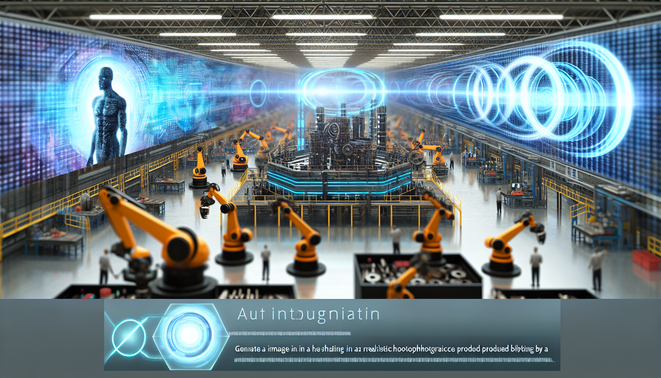
Introduction to AI in Automation
AI has become a transformative force in automation across various industries, fundamentally altering how businesses operate. Its adoption is rapidly accelerating, driven by the need for increased efficiency, accuracy, and adaptability in production and service delivery. A recent study from Cognex highlights that 57% of manufacturers are already employing AI in machine vision, demonstrating its critical role in enhancing production line capabilities [Source: StockTitan].
Moreover, sectors like insurance are witnessing substantial shifts due to AI adoption, with 97% of insurers accelerating their efforts in automation. With approximately 43% of manual tasks projected to be automated by 2030, businesses are re-evaluating workforce needs and preparing for significant changes in operational structures [Source: Insurance Times].
In manufacturing, 95% of leaders affirm that integrating AI is essential for future success, yet many face hurdles in scaling pilot projects effectively due to legacy systems and fragmented data environments. Those proactively engaging with AI are cultivating operational advantages that translate into enhanced efficiency and adaptability, marking a paradigm shift in industrial operations [Source: Forbes].
As industries embrace AI, it is indispensable for enhancing automation practices, driving innovation and shaping the future of work. For more insights into specific automation applications, consider exploring how automation is reshaping workplace dynamics.
Current Trends in AI Automation
As companies increasingly embrace AI-driven automation, several trends are emerging in the landscape of robotics and related technologies. A significant focus is on Autonomous Mobile Robots (AMRs), which are revolutionizing warehouse operations. Modern Materials Handling’s 2026 Outlook Survey indicates that businesses are planning substantial investments in robotics, AMRs, and automation software, reflecting a growing confidence in these technologies to enhance operational efficiency [Source: Logistics Management].
Moreover, advancements in edge AI computing are playing a critical role in supporting AMRs and automated guided vehicles (AGVs). Companies like Neousys are showcasing robust AI embedded computing systems designed to optimize real-time data processing in industrial environments, further driving automation in logistics and warehouse management [Source: Unmanned Systems Technology].
Additionally, the push towards a no-code workflow technology is simplifying the implementation of complex automation processes, making it easier for companies to integrate automated solutions without requiring extensive programming knowledge. This shift allows organizations to focus more on strategic initiatives and quick scalability of their operations [Source: Logistics Management].
Overall, companies are reallocating budgets towards innovative automation technologies, recognizing their potential for driving efficiency, reducing operational costs, and adapting to rapidly changing market demands. The continued evolution of these trends suggests a broader transformation in how businesses leverage AI and robotics to enhance their workflows. For a deeper exploration of automation in business, check our articles on the impact of automation on workplace examples here and understanding small business workflow management here.
Applications of AI in Various Industries
Artificial Intelligence (AI) has become a pivotal force across various sectors, notably in manufacturing, logistics, and warehouse operations, significantly enhancing efficiency and productivity.
In manufacturing, AI-driven technologies such as predictive maintenance are being deployed to optimize machinery operations. Implementing AI can reduce downtime by predicting equipment failures before they occur, resulting in substantial cost savings and improved production schedules. For instance, General Electric (GE) reported that their use of AI for predictive maintenance in wind turbines has yielded a 10% reduction in maintenance costs and a 15% increase in output efficiency [Source: GE].
Logistics is witnessing transformative changes as well. Agentic AI, which automates decision-making processes within logistics workflows, is reshaping traditional operations. For example, the integration of AI with Transport Management Systems (TMS) allows companies like DHL to streamline shipping routes, optimize load capacities, and enhance delivery times. A case study on DHL reveals that these AI enhancements have not only improved operational efficiency but have also led to a reduction in logistics costs by around 20% [Source: Logistics Management].
In warehouse operations, AI technologies such as Autonomous Mobile Robots (AMRs) are revolutionizing material handling. Typical applications include inventory auditing and order fulfillment, where robots can navigate seamlessly through complex warehouse layouts. Companies like Amazon have reported significant improvements in fulfillment speed due to such automation strategies. Their recent advancements in using AI to optimize warehouse layouts have resulted in a 25% decrease in order processing time [Source: Logistics Management].
These applications illustrate the growing dependence on AI technologies, driving significant transformations across manufacturing, logistics, and warehouse operations. The successful implementations of AI not only streamline processes but also deliver measurable returns on investment for businesses adapting to the digital landscape. For further insights on automation in business processes, you can explore our article on the automated dashboards for efficiency.
Benefits of Implementing AI for Automation
Implementing AI for automation yields numerous benefits that can transform business operations significantly. One of the primary advantages is enhanced efficiency. AI-driven tools streamline repetitive tasks, allowing organizations to optimize resources and increase productivity. For instance, companies like RobosizeME have successfully implemented AI solutions in the hospitality sector, saving over 200,000 labor hours annually by automating workflows, thereby enabling staff to focus on more strategic initiatives [Source: HospitalityNet].
In addition to efficiency, AI automation can lead to substantial cost savings. A recent tool launched by HeyBRB.ai allows businesses to calculate the costs associated with manual admin tasks, highlighting savings that can be achieved through AI adoption [Source: FinancialContent]. By reducing time spent on invoicing, client communications, and scheduling, businesses can allocate financial resources more effectively.
Improved decision-making processes are another crucial benefit of automation through AI. With AI tools, organizations can leverage data analytics and real-time insights to make informed decisions quickly. These capabilities are exemplified by Lenovo’s new Hybrid AI Advantage™, designed to accelerate AI adoption across industries, ultimately leading to operational efficiency and intelligent automation [Source: Manila Standard].
Overall, the integration of AI into automation not only enhances efficiency and reduces costs but also empowers organizations to make better, data-driven decisions, setting the stage for sustained growth and innovation. For more insights into how automation can transform business processes, explore our article on the impact of automation in the workplace.
Challenges in AI Adoption
Organizations face several significant hurdles in adopting AI technologies, primarily rooted in legacy systems, data fragmentation, and the challenges of scaling pilot projects.
Legacy Systems: Many companies operate with outdated infrastructure that hinders the integration of advanced AI solutions. For instance, nearly half of IT budgets in sectors like asset finance are directed towards maintaining these legacy systems, which often obstruct the adoption of innovative technologies like AI. Over 80% of leaders in the field express the desire to integrate AI, yet the overwhelming reliance on outdated systems complicates this process. Research indicates that confidence in data quality and accessibility is essential, but many organizations struggle with these issues, which can stall AI initiatives before they even begin [Source: FT Adviser].
Data Fragmentation: Data silos and inconsistencies pose a significant challenge to organizations seeking to leverage AI effectively. A report highlights that while 61% of data leaders recognize improved data quality as a facilitator for moving AI projects forward, 50% still identify data quality and retrieval as critical obstacles. Inconsistent processes, unclear ownership, and poorly defined metrics result in ambiguity in the data produced, eroding trust in both the data and the systems that generate it. This disconnect hinders organizations from achieving the operational fluency necessary for successful AI adoption [Source: The Next Web].
Transition from Pilot to Full-Scale Implementation: Transitioning AI pilot projects to full-scale implementation remains a daunting task. A significant number of organizations initiate AI trials, yet only a small fraction succeed in scaling them. In the retail sector, for example, only 6% of retailers consider their AI capabilities mature, despite 83% acknowledging the necessity of AI for competitive advantage. Common barriers include poor or siloed data and integration challenges between existing systems, which complicate the transition from concept to practical application [Source: Chain Store Age].
Efforts to overcome these challenges should focus on improving data governance and developing a more integrated IT infrastructure that supports AI applications. This will ultimately enable organizations to harness the full potential of AI technologies effectively. For further insights on related topics, read about strategies for overcoming common pitfalls in automation implementation here.
The Future of AI and Automation
The future of AI and automation holds immense potential for transforming industries and enhancing operational efficiency. Emerging technologies, such as agentic AI and structured content systems, are leading the way in this landscape. Agentic AI is reshaping logistics, moving beyond traditional systems and enabling more adaptive, data-driven workflows. This evolution suggests a shift from siloed operational processes to interconnected, intelligent systems that streamline decision-making and operational flow [Source: Logistics Management].
Additionally, structured content is becoming a foundational aspect supporting AI workflows and automation. By organizing content in a reusable and structured format, organizations can enhance the efficiency and scalability of their automation efforts. This approach allows for the seamless integration of content into various applications and workflows, significantly improving response times and accuracy [Source: Robotics and Automation News].
To stay ahead in this rapidly evolving field, organizations should consider the following strategies:
- Invest in Mobile-First and Cloud Technologies: Embracing cloud-native management systems can unify data and automate workflows. This shift enables faster and more personalized services by creating consolidated databases that serve as the operational backbone for AI applications [Source: Hospitality Net].
- Focus on Continuous Learning and Adaptation: Organizations must foster a culture of continuous learning to adapt to emerging technologies. Training teams to work alongside AI tools ensures that they can leverage these technologies effectively, maximizing return on investment.
- Implement No-Code Solutions: As non-technical employees increasingly seek to automate processes, adopting no-code platforms can democratize automation, enabling faster deployment of solutions and reducing reliance on IT departments.
- Monitor Industry Trends and Regulatory Developments: Staying informed about advancements in AI and regulatory frameworks is crucial. Organizations should be proactive in adapting to changes that could impact their operations and strategy.
By embracing these emerging technologies and strategies, organizations can position themselves to thrive in an increasingly automated world. For a comprehensive overview of how automation impacts the workplace, consider exploring our article on the impact of automation in the workplace.
Call to Action
Ready to explore how AI can transform your business through automation? Visit us at ampautomations.com to learn more about our innovative solutions and how we can help optimize your workflows today!
Sources
- AMP Automations – Impact of Automation in the Workplace
- GE – How Predictive Maintenance can Boost Efficiency
- FT Adviser – Legacy Systems Challenge AI Adoption
- Chain Store Age – Retailers Stuck in AI Integration
- Logistics Management – AI in Warehouse Operations
- FinancialContent – HeyBRB.ai Launches New Cost Tool
- Manila Standard – Lenovo Accelerates Production-ready Enterprise AI
- HospitalityNet – RobosizeME Workflow Automation
- The Next Web – AI Amplifies Data Challenges
- Unmanned Systems Technology – Neousys at LogiMAT 2026
- Insurance Times – Insurers Accelerate Automation Efforts
- Robotics and Automation News – Structured Content in AI Workflows
- Logistics Management – What to Expect at Modex 2026
- StockTitan – Cognex Study on AI in Machine Vision
- Forbes – AI in Manufacturing: The Essential Shift