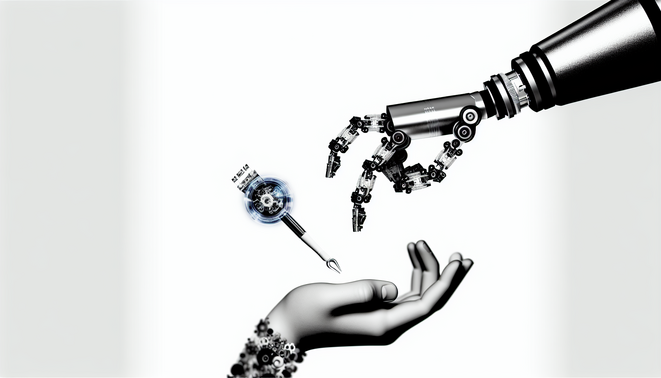
Introduction: The New Paradigm
The landscape of automation is rapidly changing, with an increasing emphasis on collaboration between technology and human interaction. As industries adopt automation tools, the focus has shifted from mere process efficiency to fostering a synergistic relationship where humans and machines work together effectively. For instance, semi-automated systems like bin picking technologies illustrate this collaboration, allowing operators to maintain engagement in the process while benefiting from the strength and precision of automation [Source: Robotics and Automation News].
Understanding Automation: The Mechanics Behind Technology
Automation serves as the backbone of modern technology, leveraging a variety of systems and processes to perform tasks seamlessly. At its core, automation encompasses the use of software and hardware to execute repetitive tasks without human intervention, thus enhancing efficiency and productivity. These systems benefit industries by offloading mundane duties from human operators to intelligent machinery, allowing teams to focus on more strategic activities.
One of the fundamental components of automation is Robotic Process Automation (RPA), which employs software robots to handle routine tasks such as data entry and report generation. As outlined by discussions at the recent TechEx Global conference, RPA is integral in optimizing workflows by eliminating manual interventions, thereby fostering a workforce that engages in higher-value tasks and decision-making processes [Source: The Next Web].
Another critical aspect is the interplay between automation and Artificial Intelligence (AI). As organizations adopt advanced AI algorithms, they enhance their automation capabilities, allowing for more complex decision-making and real-time responses within operational frameworks. This synergy not only boosts productivity but also mitigates operational risks by promoting efficient process management [Source: Robotics and Automation News].
Material stability also plays a crucial role in the efficacy of automation systems. With automation heavily reliant on the physical properties of materials—such as alignment precision and thermal stability—understanding and optimizing these elements is essential for maintaining consistent performance and data integrity over time [Source: Robotics and Automation News].
As manufacturers navigate these complexities, the integration of AI-driven control mechanisms is becoming increasingly imperative to meet operational demands and enhance overall system reliability.
The Human Element: Why Humans Matter More Than Ever
In an age where automation is transforming industries, the unique human qualities of emotional intelligence, creativity, and the ability to foster connections have never been more critical. Emotional intelligence, often termed a key leadership capability, enables individuals to build trust, resolve conflicts, and communicate effectively. Research indicates that those who develop emotional intelligence tend to manage stress better, persist through challenges, and make thoughtful decisions, significantly enhancing workplace effectiveness and professional success [Source: HR Dive].
Moreover, the ability to forge human connections remains irreplaceable. A recent survey highlighted that emotional connections at work notably influence employee engagement and retention. Beyond mere functionality, workplace culture increasingly hinges on trust and appreciation, illustrating that fostering interpersonal relationships is essential to organizational success [Source: Money Talks News].
Additionally, creativity serves as a cornerstone of innovation that machines cannot replicate. While automation can handle repetitive tasks efficiently, it lacks the imaginative capacity that drives new ideas and solutions. Organizations recognizing the strength of their workforce’s creative potential are better positioned to thrive in an automated environment [Source: Thomson Reuters].
As companies evolve, prioritizing these human elements—to not only survive but flourish amid automation—will differentiate successful organizations from their counterparts. This shift from viewing talent as a mere resource to a strategic asset reflects the indispensable role of human qualities in modern workspaces.
Human-in-the-Loop Systems: A Collaborative Approach
Human-in-the-loop (HITL) systems represent a crucial intersection between human creativity and automated processes, leveraging the strengths of both to enhance productivity and quality. One of the primary benefits of these systems is the ability to integrate human oversight in AI workflows, which not only improves decision-making but also mitigates risks associated with fully autonomous systems. As organizations increasingly adopt AI, those with human-in-the-loop frameworks report enhanced productivity, as these systems facilitate a governed approach to AI, ensuring that human judgment complements machine efficiency [Source: Street Insider].
However, implementing HITL systems does not come without challenges. The need for effective collaboration between humans and AI can be a complex undertaking, often requiring a shift in workplace culture and operational processes. Strategic orchestration becomes essential, as organizations must navigate the nuances of integrating human input within automated environments [Source: The Business Desk]. Additionally, there is an ongoing challenge of ensuring that AI systems are designed to incorporate human insights effectively, which is critical in maintaining a competitive edge in increasingly automated industries [Source: Forbes].
To optimize the benefits of human-in-the-loop systems, organizations must focus on creating workflows that promote seamless collaboration, enabling both technology and human expertise to shine.
Case Studies: Success Stories of Collaboration
Several companies have demonstrated success in integrating automation with human input, resulting in improved efficiency and operational effectiveness.
1. Zasche’s Semi-Automated Bin Picking
Zasche has implemented semi-automated bin picking systems that emphasize a collaborative approach between human operators and automation technology. This system not only enhances safety by allowing human expertise to guide the final positioning of items but also provides automation’s strength and stability for lifting and handling tasks. Operators interact with the machinery using intuitive controls, allowing them to maintain engagement while benefiting from the reliability that automation brings. This synergy leads to higher efficiency and flexibility in workflow management, showcasing a model where human skill and automation work in harmony rather than in competition. [Source: Robotics and Automation News]
2. AI in Strategic Business Decision-Making
A study highlighted by Forbes examined the integration of AI technologies with human strategic thinking in business management teams. In their analysis, a group referred to as the ‘Hive Mind’ utilized AI to simulate insights similar to those provided by a human panel. Although the AI was effective in mirroring many insights, it struggled with nuanced cultural references that human strategists recognized. This case illustrates the importance of combining AI’s data processing capabilities with human intuition for complex decision-making, enabling companies to make well-rounded strategic choices. [Source: Forbes]
3. Automation in Security Workflows
An analysis in *Dark Reading* focuses on how companies are now employing automation in cybersecurity, transitioning from merely accelerating processes to ensuring compliance and risk management. By consolidating their security tools into a single management layer, businesses enhance their operational resilience and efficiency. The combination of automated workflows and human oversight allows organizations to achieve a comprehensive security posture while freeing employees to engage in higher-value tasks. [Source: Dark Reading]
These examples underscore the value of harmonizing automation with human expertise, thereby creating robust systems that elevate productivity and responsiveness in varying business environments.
Future Perspectives: Balancing Act in an Automated World
In the ever-evolving landscape of employment shaped by automation, a balanced approach—where technology complements rather than displaces human roles—is crucial for future job markets. As automation technologies advance, predictions indicate that a significant percentage of jobs could be at risk. For instance, AI safety expert Dr. Roman Yampolskiy warns that as many as 99% of jobs might vanish by 2027 if automation progresses unchecked [Source: Great Andhra]. However, this statistic does not capture the entire story; the challenge lies in the transition of jobs rather than simple job elimination.
Surveys reveal a worrying trend of shrinking entry-level positions as companies increasingly automate tasks that were once fundamental to learning and career progression [Source: Ynet News]. Ironically, while automation enhances efficiency and opens avenues for advanced roles, it threatens to undervalue the foundational jobs that cultivate a skilled workforce. The emphasis on efficiency has led to notable job cuts in various sectors, including a significant reduction within service and operational roles, leading to fears about long-term job security [Source: Insurance Times].
To thrive in this automated world, organizations must reimagine job roles and invest in training that allows workers to effectively collaborate with AI. Leaders in businesses often view AI as an essential strategy for growth, yet many employees express concerns about its implications on job security and creative roles [Source: Vogue]. Emphasizing human creativity while leveraging AI’s strengths can help maintain a workforce that is not only resilient but also capable of delivering unprecedented levels of customer engagement and service.
Ultimately, the key to success in an automated future lies in fostering a collaborative environment where automation serves as a tool for enhancing human capabilities—ensuring that technology augments the workforce rather than replaces it. The transformation necessitates not just the integration of advanced technologies but also a proactive redesign of organizational structures to enhance human roles within the workforce [Source: Business Insider].
Call to Action
To learn more about how automation can enhance your business processes and to explore our full offerings, please visit ampautomations.com.
Sources
- Business Insider – How AI Agents are Taking on Work: The Challenge of Scaling
- Dark Reading – 5 Step Guide to Building Trusted Security Orchestration in 2026
- The Drum – Belonging is the Human Feeling That AI Can’t Replicate
- Forbes – Management Teams Need AI to be More Disagreeable
- Forbes – Why VCs Are Going Back to School to Master Human-in-the-Loop AI Systems
- Great Andhra – AI Could Wipe Out 99% of Jobs by 2027, Expert Warns
- HR Dive – Emotional Intelligence in the Workplace: University of Phoenix Research
- Insurance Times – The Real AI Threat to Insurance Jobs is Doing Nothing
- Money Talks News – Trust, Emotions, and Chemistry are Reshaping the American Workforce
- Street Insider – AI Didn’t Break the Workforce. Bad Implementation Did.
- The Business Desk – Leading the Multi-Agent Workforce in 2026
- The Next Web – TechEx Global Returns to London with Enterprise Technology and AI Execution
- Thomson Reuters – CMBDO Forum 2026: The Long Game on Talent
- Ynet News – Shrinking Entry-Level Positions and the Rise of Automation