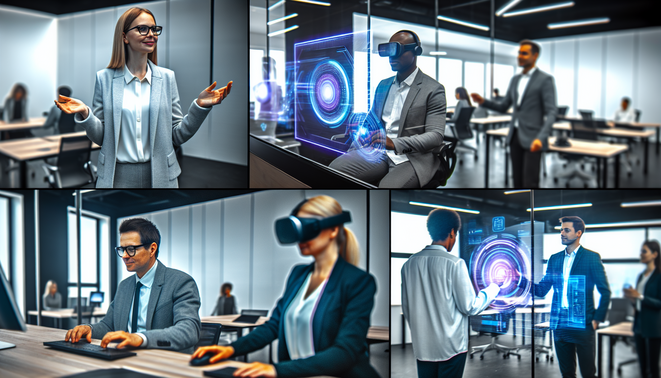
Introduction to Smart Business Technology
Smart business technology encompasses a range of digital tools and systems designed to streamline operations, enhance efficiency, and spur growth through automation and data-driven decision-making. It includes technologies like cloud computing, artificial intelligence (AI), and the Internet of Things (IoT), which collectively transform traditional business practices into more agile and efficient processes.
The significance of smart business technology is increasingly recognized in today’s fast-paced digital landscape. Companies leveraging these technologies can optimize resource usage, quickly adapt to market changes, and improve their overall operational efficiency. A recent report highlighted that 56% of business leaders design AI strategies to achieve specific outcomes, demonstrating a commitment to using technology intentionally for better business practices [Source: HRE Executive]. Furthermore, adopting smart technologies can lead to substantial cost savings and a significant advantage over competitors, particularly as firms that integrate AI effectively report productivity gains compared to those that lag behind [Source: Robotics and Automation News].
Moreover, the role of automation within smart business technology cannot be understated. Automation facilitates not only efficiency enhancements but also fosters innovation, enabling businesses to create new avenues for growth and customer engagement. Reports have indicated that automated systems have transformed various sectors, including construction and supply chain management, where process optimization leads to substantial cost reduction—savings that can be as high as 80% compared to traditional methods [Source: Forbes].
Investing in smart business technology is, therefore, crucial for businesses striving to stay competitive and achieve sustainable growth in an increasingly digital world. This investment not only streamlines operations but also prepares organizations to meet future challenges head-on, fostering a culture of continuous improvement and adaptation. For more on how automation enhances specific business functions, explore our articles on examples of workplace automation and accounts payable automation benefits.
Latest Trends in Smart Business Technology
The landscape of smart business technology in 2023 is characterized by the significant integration of artificial intelligence (AI), advancements in cloud computing, and the growing reliance on mobile technology, shaping decision-making and strategic planning for organizations.
1. Integration of Artificial Intelligence
AI has transitioned from being merely a tool to a core component of business strategy. Companies are increasingly leveraging AI for enhancing productivity and streamlining operations. For instance, AI-driven solutions help automate repetitive tasks, allowing employees to focus on strategic initiatives. Reports indicate that organizations using AI can expect substantial gains in efficiency, with AI acting as a new operating system for businesses by managing workflows and decision-making processes more effectively [Source: T2C Online].
2. Advancements in Cloud Computing
The cloud computing sector has seen immense growth as businesses recognize the need for scalable and secure infrastructure to support their operations. Companies like Alibaba are heavily investing in cloud technology, aiming to achieve over $100 billion in AI and cloud revenue by capitalizing on this boom [Source: Greenwich Time]. These advancements enable organizations to manage data more effectively, enhance collaboration, and innovate rapidly, ensuring they remain competitive amidst the digital transformation.
3. Growing Prevalence of Mobile Technology
Mobile technology now plays a crucial role in business strategies, evidenced by the surge in wireless connectivity solutions that support automated applications, especially in logistics and warehousing. The shift towards autonomous mobile robots necessitates reliable connectivity, with private 5G networks projected to significantly enhance operational efficiency [Source: E-Commerce Times]. Furthermore, mobile services have become essential for customer engagement, with mobile data revenue projected to grow substantially alongside the adoption of premium 5G services [Source: Asian Business Review].
In conclusion, the convergence of AI, cloud computing, and mobile technology not only streamlines operational processes but also fosters a data-driven culture, essential for informed decision-making and strategic planning in today’s fast-paced business environment. Organizations must embrace these technologies to remain relevant and competitive in the evolving market landscape. For more insights, you can explore our related articles on automated communication and customer satisfaction through automation.
AI: The Game Changer for Businesses
AI technologies are revolutionizing business productivity, creating a notable shift in workforce dynamics. Companies that effectively integrate AI tools into their operations can experience significant gains in efficiency and output. As organizations invest in training employees to utilize AI effectively, they often see productivity surge. Reports indicate that organizations employing AI agents can foster an environment that not only enhances operational speed but also transforms their workforce strategy, positioning themselves ahead of competitors who may lag in this transition [Source: T2C Online].
However, with these advancements comes the challenge of managing employee perceptions and concerns regarding AI. While approximately 83% of HR decision-makers agree that AI helps workers complete tasks more efficiently, 67% also report that such tools are creating “new points of friction and mistrust” among employees [Source: CNBC]. This mistrust is exacerbated by instances of AI-generated content being perceived as subpar, leading employees to feel uncertain about the integrity and originality of their work [Source: FinTech Futures].
To balance the benefits of AI with these concerns, organizations need to prioritize transparency and open communication. Implementing training programs that enhance AI literacy among employees could mitigate feelings of mistrust and ensure that workers feel equipped to take advantage of AI’s capabilities without feeling threatened. Forward-thinking businesses are recognizing this need for a balanced approach, acknowledging that fostering an educated workforce is essential as they navigate the complexities introduced by AI adoption [Source: HR Magazine].
Cybersecurity in the Era of Smart Technology
The rise of smart technology has introduced significant cybersecurity challenges that organizations must navigate to ensure the security of their operations. As businesses adopt Internet of Things (IoT) devices and integrate cloud-based solutions, they expose themselves to a myriad of vulnerabilities. According to an interview with Troy Rydman, CSO of Packsize, key risks include insecure IoT devices, legacy systems, and human errors, all of which can compromise the safety of critical operations in industries such as manufacturing and supply chain management [Source: Help Net Security].
The escalating sophistication of cyber threats, particularly those powered by AI, presents additional hurdles. A report indicated that nearly one-third of state and local organizations experienced cyber breaches within a year, struggling to manage the increasing scale and complexity of attacks that exploit these emerging technologies [Source: Government Technology].
To safeguard against these threats, businesses are encouraged to implement a robust cybersecurity strategy encompassing several best practices:
- Training and Awareness: Cultivating a security-aware culture within the organization is vital. Employees should receive continuous training on identifying phishing attempts and other cyber threats.
- Layered Security Solutions: Employing multi-layered security, including firewalls, intrusion detection systems, and secure access controls, can significantly bolster an organization’s defense against potential breaches.
- Risk Assessment: Regularly conducting risk assessments allows businesses to identify vulnerabilities unique to their operations and develop strategies tailored to mitigate these risks effectively.
- Collaboration with Industry Leaders: Joining forces with other organizations to share insights and strategies for combating online scams and fraud can improve overall resilience. Major tech firms have established accords to share information on threat trends and develop collective defensive tools [Source: SecurityWeek].
By adopting these strategies, organizations can not only protect themselves but also continue to innovate and leverage smart technologies safely in an increasingly interconnected digital landscape. For more on optimizing business processes with automation, check out our insights on the impact of automation in the workplace.
Small Business Innovations and AI Readiness
Small businesses are increasingly integrating smart technologies and AI solutions to enhance their operations, demonstrating notable innovations along the way. One example is the use of AI-driven tools in retail, where small shops are employing personalized apps that help consumers verify product prices and promotions in real-time, thus improving the shopping experience and boosting sales. This ‘agentic commerce’ trend is reshaping customer interactions, even as studies indicate that only a fraction of customers fully trust AI recommendations in purchasing decisions [Source: Ecommerce Times].
Another significant innovation comes from the legal sector, where law firms are embracing AI and hybrid work models. A notable case is Ligris & Associates, which has successfully integrated AI technologies to streamline operations, addressing both productivity and the evolving needs of their workforce [Source: Massachusetts Lawyers Weekly]. This adaptation showcases the potential for AI to drive efficiency, although many small businesses still struggle to realize significant returns on their AI investments. According to a recent survey, while 78% of UK organizations use AI, only 31% report seeing a positive return on investment [Source: Consultancy UK].
Additionally, small businesses are recognizing the importance of being AI-ready. Those that approach AI adoption with a strategic mindset tend to achieve better results, contrasting with companies that treat digital transformation as merely discretionary. An ‘AI-curious’ mentality may lead to missed opportunities, emphasizing the need for businesses to establish clear goals and metrics before implementing AI solutions [Source: Consultancy UK].
Various other small enterprises are employing AI for localized marketing, such as TikTok’s emphasis on small business ads, reflecting a growing trend towards leveraging technology for community engagement [Source: Forbes]. These examples collectively illustrate the critical need for small businesses to innovate and become AI-ready, ensuring they can compete effectively in a fast-evolving digital landscape. For more insights on how automation impacts small business operations, explore our articles on the role of AI in operations and the impact of automation.
The Future of Business Technology: Predictions & Insights
The future of business technology is poised for significant transformation, driven primarily by advancements in artificial intelligence (AI) and evolving workplace dynamics. Experts predict that the ongoing adoption of AI will not only enhance productivity but may also pave the way for the widespread implementation of a four-day workweek. As organizations increasingly leverage digital tools, they aim to improve workplace satisfaction and overall efficiency, as seen in companies like Marsh McLennan, which successfully enhanced employee well-being through innovative HR technologies [Source: SHRM].
Furthermore, the demand for employees skilled in managing and collaborating with AI systems is anticipated to grow. As a result, companies will need to prioritize upskilling their workforce to meet these new challenges. This shift not only reflects the changing role of technology in human resources and employee management but also emphasizes the vital role HR will play in shaping organizational strategies around AI usage [Source: SHRM].
In addition to these technological advancements, organizations are expected to explore novel methods for employee engagement and productivity—potentially reshaping traditional working patterns by implementing flexible schedules that could include a four-day workweek. This could lead to a re-evaluation of work-life balance strategies and the integration of AI tools into daily operations, ultimately aiming for a more harmonious workplace environment [Source: SHRM].
As these trends unfold, businesses must stay informed and adaptable, ensuring they harness the potential of emerging technologies while enhancing employee experiences. For further insights into optimizing workflows and integrating technology into business practices, explore our articles on identifying high-impact processes and evaluating workflow management software.
Conclusion
Smart business technology is here to stay, reshaping how organizations operate and innovate. By adopting AI, cloud computing, and mobile technologies, businesses can improve efficiency, enhance customer experiences, and secure their operations against potential threats. Small businesses, in particular, must prioritize becoming AI-ready, utilizing the advancements in technology to carve out a significant presence in the market. Organizations that remain agile and prepare for the future of work will thrive in the competitive landscape of tomorrow.
To learn more about how automation and smart business technologies can benefit your organization, visit us at ampautomations.com.
Sources
- Asian Business Review – IoT Boom Drives Japan’s Mobile Revenue $514B Surpassing Human Users
- CNBC – AI Creating New Points of Friction for Workers
- Consultancy UK – Two-Thirds of Firms Yet to See ROI on AI Investments
- Ecommerce Times – Shoppers Turn to Verify Before Buying as Trust Erodes
- FinTech Futures – Demystifying AI’s Impact on Economies, Governments, and Society
- Forbes – Small Business Tech News: Google Maps Gets a Big AI Upgrade
- Government Technology – Growing Threat Surface Challenge Cyber Resilience
- Greenwich Time – China’s Alibaba Targets $100B in AI and Cloud
- Help Net Security – Key Cybersecurity Risks in Smart Factories
- HR Magazine – How Can HR Tackle the Sharp Rise in AI-Generated Grievances
- Robotics and Automation News – How Automation is Transforming Remanufacturing
- SecurityWeek – Major Firms Sign Pact to Combat Scams
- SHRM – Executive Download: HR Technology Trends March 2026
- SHRM – HR Plays Key Role in Turning AI Policy into Workforce Strategy
- T2C Online – AI is No Longer a Tool, It’s a Workforce Strategy