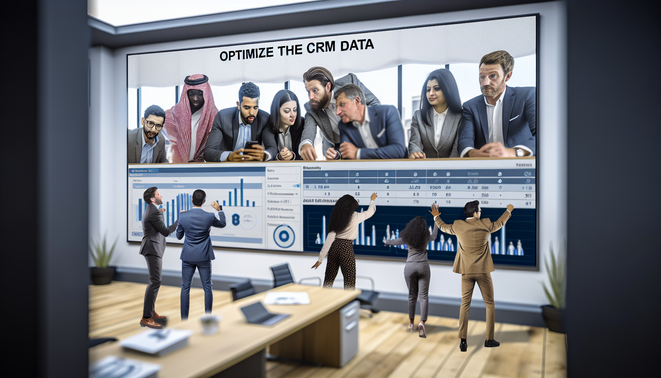
Understanding CRM Optimization
CRM optimization refers to the strategic approach aimed at enhancing the performance and functionality of Customer Relationship Management systems. This process includes refining workflows, improving data accuracy, and integrating various tools to streamline customer interactions and data management. By optimizing their CRM, businesses can significantly enhance customer relationships, drive sales performance, and improve overall business efficiency.
The significance of CRM optimization lies primarily in its ability to provide teams with real-time access to critical data, enabling informed decision-making. Integrated ERP-CRM systems can reduce lost sales opportunities by up to 75% by ensuring that sales teams have up-to-date information regarding stock levels and delivery timelines readily available [Source: Manufacturing.net]. This real-time insight enhances communication and coordination among various departments, fostering a cohesive workflow.
Moreover, CRM optimization leads to better understanding and segmentation of customers, allowing for tailored marketing strategies that improve engagement and loyalty. Automated features within CRMs can facilitate personalized interactions and behavior-triggered communications, thereby enhancing customer experience and satisfaction [Source: The Drum].
Implementing CRM optimization not only improves customer interactions but also elevates business efficiency through standardized processes and automation, ultimately contributing to sustained growth and profitability in a competitive marketplace. For businesses eager to enhance their operational efficiency and customer satisfaction, exploring detailed strategies such as automating lead nurturing and integrating real-time decision-making can be vital [Source: AMP Automations].
Integrating ERP and CRM for Success
Integrating Enterprise Resource Planning (ERP) with Customer Relationship Management (CRM) systems brings significant advantages, particularly in enhancing real-time data access, which directly influences sales performance. Effective integration allows sales teams to access up-to-date information on inventory levels, pricing, and customer history, resulting in informed decision-making and timely responses to customer inquiries.
Research indicates that integrated ERP-CRM systems can reduce lost sales by up to 75% by providing accurate, real-time information that supports crucial business operations and sales processes [Source: Manufacturing.net]. This seamless data flow reduces reliance on manual data entry and minimizes human error, which is essential in maintaining a competitive edge in sales.
Moreover, automated data synchronization between CRM and ERP systems enhances communication across teams, allowing sales representatives to focus on closing deals rather than seeking information from other departments [Source: FintechZoom]. The result is a cohesive sales environment where teams can leverage shared insights to tailor their approaches to customer needs effectively.
By prioritizing this integration, organizations streamline operations while cultivating a single, reliable source of truth for data that improves overall team efficiency and customer satisfaction. Explore these articles on workflow management and automation technologies from our blog for more insights: Understanding Small Business Workflow Management and Measuring the ROI of Your Automation Projects.
Leveraging Customer Data Effectively
To effectively leverage customer data and transform it into actionable insights, businesses should focus on several key strategies:
- Integrate Customer Data Platforms (CDPs): By investing in CDPs, companies can unify data collected from various sources such as CRMs and data warehouses. This integration allows for a holistic view of customer interactions across all touchpoints, facilitating real-time decision-making. According to Adweek, transitioning from batch campaigns to real-time decision-making can significantly enhance marketing relevance and ROI.
- Utilize AI and Analytics: The application of AI in analyzing customer data is essential for understanding consumer behavior and preferences. This helps in personalizing marketing strategies, ensuring that campaigns are not only timely but also resonate with the target audience. As noted in a report by CreatorIQ, leveraging insights from AI can refine marketing analytics and enhance customer engagement.
- Focus on Delivery Capabilities: As part of the marketing technology stack, refining delivery capabilities can ensure that personalized communications reach customers effectively. This means optimizing email platforms, mobile apps, and advertising channels to create seamless experiences that foster customer loyalty.
- Capture Deterministic Data: Integrating high-fidelity, deterministic purchase data into marketing strategies allows businesses to trace consumer behaviors directly back to verified purchases. This approach, as discussed in MediaPost, enhances targeting and measurement capabilities, enabling more effective marketing strategies based on real purchase behaviors.
By utilizing these strategies, businesses can unlock the power of customer data, leading to informed and agile marketing decisions that drive engagement and sales. For further insights on enhancing customer engagement, consider exploring our article on automated communication strategies.
Embracing Personalization in CRM Strategies
Embracing personalization in CRM strategies is vital for businesses aiming to enhance customer engagement and loyalty. By creating tailored CRM profiles, organizations can better understand the unique needs and preferences of their diverse customer segments. This involves leveraging customer data to develop targeted marketing strategies that resonate with specific audiences.
For instance, the hospitality industry illustrates the power of personalized CRM strategies. Hotels like Whittlebury Park utilize guest personas to refine their marketing efforts, ensuring that they cater to the distinct needs of different guests related to various services such as golf, spas, and dining. The digital marketing manager emphasizes, “Every guest tells us a different story,” highlighting the necessity of personalization in enhancing the guest journey and overall brand recognition [Source: Hospitality Net].
Additionally, businesses such as Nekter Juice Bars demonstrate that effective personalization, aided by robust data collection and analysis, is crucial in creating memorable customer experiences. Their approach focuses on building a strong loyalty program that expands beyond the stores, ensuring consistent quality and engagement through various channels, including social media and mobile apps [Source: MediaPost].
Furthermore, the evolving retail landscape emphasizes the importance of personalization paired with data strategy. As retailers shift toward AI-driven solutions, developing first-party data strategies becomes essential for fostering trust and enhancing customer interactions [Source: CreatorIQ].
In summary, the integration of personalized CRM profiles and tailored experiences meets the unique demands of customers and drives deeper engagement and satisfaction across all customer touchpoints.
Adopting Modern Decision-Making Layers
Modern decision-making layers in CRM systems are crucial for enhancing operational efficiency, relevance, and return on investment (ROI) for businesses. These layers serve as a bridge between data collection and actionable insights, enabling organizations to shift from traditional, siloed decision-making to real-time, AI-assisted strategies.
As businesses increasingly rely on data from customer databases, marketing technologies, and communication channels, the integration of a robust decisioning layer becomes essential. This layer enables marketing teams to process customer information swiftly, facilitating personalized interactions based on real-time data. By moving beyond reactive campaigns, businesses can better capture engagement and optimize their marketing efforts across multiple platforms, leading to improved customer experiences and higher ROI [Source: Adweek].
Moreover, implementing automated tools that connect CRMs with project management and communication platforms helps minimize human error, streamline operations, and enhance collaboration. This technological support allows teams to focus on innovative growth rather than repetitive tasks, ultimately boosting productivity and efficiency [Source: FintechZoom].
Investing in modern decision-making layers not only accelerates the decision-making process but also aligns strategies with the rapidly changing needs of consumers. As businesses adapt to this digital era, integrating effective decision-making components can significantly reduce the complexities of operations, fostering an agile work culture that values swift and informed decisions.
Measuring Your CRM Optimization Success
To effectively measure the success of your CRM optimization efforts, consider the following key strategies:
- Define Clear KPIs: Establish specific Key Performance Indicators (KPIs) that align with your business objectives. Useful KPIs for CRM optimization include lead conversion rates, customer acquisition costs, retention rates, and customer lifetime value (CLV). Regularly reviewing these metrics allows you to gauge the effectiveness of your strategies and make adjustments as necessary.
- Utilize Analytics Tools: Implement CRM analytics tools to gather and analyze customer data. These tools can provide insights into customer interactions, purchase histories, and engagement levels. Analyzing this data can help identify trends and areas for improvement in your CRM processes. Tools such as Google Analytics and specific CRM reports can be instrumental in this evaluation.
- Customer Feedback Mechanisms: Regularly solicit feedback from customers through surveys and automated feedback requests post-interaction. Analyzing this feedback can provide insights into the customer experience and help direct your optimization efforts. Automated customer feedback systems can streamline this process, ensuring that you capture real-time insights.
- A/B Testing: Utilize A/B testing for different CRM strategies to identify what resonates better with your customers. This could include testing different types of email campaigns or assessing how changes in CRM processes affect customer response. By experimenting, you can glean information on customer preferences and optimize accordingly.
- Measure Return on Investment (ROI): Regularly assess the ROI of your CRM initiatives. This involves calculating the costs associated with CRM implementation against the revenue generated through improved customer relationships. Understanding this metric can help justify CRM investments and highlight areas needing further investment or adjustment. For detailed insights into measuring ROI, refer to our article on measuring the ROI of your automation projects.
- Continuous Improvement: Adopt a mindset of continuous improvement by regularly re-evaluating your CRM strategies. Use performance data to make informed decisions on what works and what doesn’t, adjusting your strategies accordingly to meet evolving customer needs and market conditions.
By implementing these strategies, businesses can ensure that their CRM systems are not only effective but also continuously evolving to meet the demands of their customer base. For more insights into automation and its effect on CRM, check out our post on the impact of automation in the workplace.
Call to Action
For more insights into enhancing your CRM systems and strategies, visit our website at ampautomations.com today.
Sources
- AMP Automations – The Impact of Automation in the Workplace
- AMP Automations – Enhancing Customer Engagement with Automated Communication Today
- AMP Automations – Measuring the ROI of Your Automation Projects Made Easy
- AMP Automations – Understanding Small Business Workflow Management
- Adweek – Transform Customer Data into Real-Time Marketing Decisions
- CreatorIQ – Retail Marketing Trends 2026
- The Drum – Are We in Danger of Marketing Automation Outpacing Strategy?
- FintechZoom – Modern Tools for Smarter Business
- Hospitality Net – A Hotel Juggling Identity Marketing, Profiling, Personalising, and Targeting for Success
- Manufacturing.net – When Sales Promises What Operations Can’t Deliver
- MediaPost – Deterministic Data: A Major Factor in Infillion Acquisition
- MediaPost – Confessions from Nekter Juice Bars CTO: Why Personalization Works